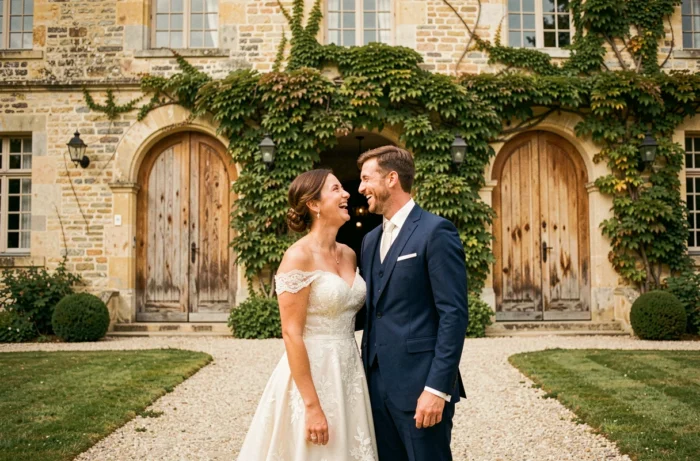
A couple books a stone estate among the vineyards, with a panoramic terrace and unobstructed views. On the day of the visit, everything seems perfect.
Three months before the wedding, the town hall flags a noise restriction after 10 p.m., the gravel access path makes it impossible for wheelchair users to get around, and the caterer says they can’t set up their kitchen without an adequate electrical connection. Planning a wedding starts with anticipating this kind of friction between the dream venue and logistical reality.
Reception venue accessibility and neighborhood restrictions
Most guides start with the budget or the date. We’re starting with what can actually derail the day: a beautiful venue that isn’t suitable for the guests who need to get there.
For a venue open to the public, accessibility requirements cover outdoor paths, indoor circulation areas, and restrooms. Ask to see the operator’s public accessibility register before signing anything. A stone staircase without a handrail, a lower-level parking lot without a paved path, or restrooms that are too narrow can quietly exclude some of your loved ones.
To explore suitable venues and vendors, the Tomy Mariage wedding website lists venues with detailed practical information.
If you’ve chosen a vacation villa, things get more complicated. A private rental doesn’t automatically allow a wedding reception. Get written confirmation of the guest capacity, permitted hours, and insurance requirements. Local noise regulations apply regardless of what the rental agreement says.
Managing music and neighbors outdoors
An outdoor wedding calls for a practical sound plan. Measures that work include notifying the neighbors in advance (a note in their mailbox or an invitation to the drinks reception), pointing speakers away from homes, and arranging to move the music indoors at a time agreed with the owner.
Ignore this, and you risk having the police show up in the middle of dessert. Your guests’ experience depends on it just as much as on your choice of DJ.

Wedding budget: what the averages don’t tell you
You’ll often see average wedding budgets that vary threefold depending on the survey. The real issue is how they’re calculated. The figures depend on the sample, the region, and which expenses are included (or left out) of the total.
One more telling fact: according to a recent survey of couples married in 2025, 51% of respondents went over their initial budget. It’s not inevitable, but it does point to a recurring planning blind spot.
Overspending rarely comes from the caterer or venue (costs negotiated early). It tends to creep in through extras added toward the end of the planning process: upgrading the flowers, adding a photo booth, extending the DJ’s hours, or increasing the budget for guest favors. Setting aside a contingency fund from the start, separate from the main budget, helps cover these last-minute decisions without blowing the total.
Civil wedding paperwork: administrative deadlines to know
The administrative side is often underestimated. The banns must be posted for ten days, and the civil wedding cannot take place before the tenth day after they are published. Requirements vary by municipality: some town halls ask for additional documents depending on the couple’s circumstances (foreign nationality, residence abroad, previous divorce).
In practice, book an appointment at the town hall at least three months before your preferred date. Ask about available time slots (some municipalities only hold weddings on certain days), and prepare the complete application at your first appointment to avoid repeated trips.
Documents not to forget
- Birth certificate issued within the last three months (six months if issued in an overseas territory or by a consulate); request it early enough to allow for postal delays
- Proof of address and identity documents for both future spouses, plus identity documents for the witnesses on the day of the ceremony
- Cerfa marriage application form, available from the relevant town hall or for download on its website
Choosing vendors: book the key services first
The reception venue, caterer, and photographer are the three vendors you’ll need to book earliest—sometimes more than a year in advance for peak-season dates. Everyone else (florist, DJ, celebrant for a non-religious ceremony) generally has more flexibility in their schedule.
Visit the venue with your caterer before signing either contract. An estate without a fully equipped kitchen, with narrow access for delivery vehicles, or without enough electrical capacity can lead to significant extra costs (a generator, kitchen equipment rental, or a refrigerated van).
For the photographer, look through full wedding galleries (not just the best shots) and check the delivery terms: number of photos, turnaround time, format, and usage rights. A low price for 50 photos delivered in six months isn’t necessarily better than an average price for 400 photos delivered in six weeks.
Final preparations: the week before the big day
The final week shouldn’t involve any major decisions. If it does, something has slipped in the schedule. Use this week to confirm, check, and share the details.
- Confirm each vendor’s arrangements in writing (arrival times, venue access, day-of contacts) and appoint a point person who isn’t the bride or groom
- Prepare a detailed schedule for the day and share it with every vendor and the witnesses, along with everyone’s phone numbers
- Check the final seating plan, provide suitable seating for guests with reduced mobility, and account for dietary requirements reported at the last minute
- Gather the decorations, stationery (place cards, menus, ceremony programs), and accessories in boxes labeled by setup area
One final detail that makes all the difference: an emergency kit for the wedding day. Safety pins, thread, scissors, painkillers, bandages, a phone charger, and a pen. Not glamorous, but this kit can save a torn dress or a witness with a migraine at 2 p.m.