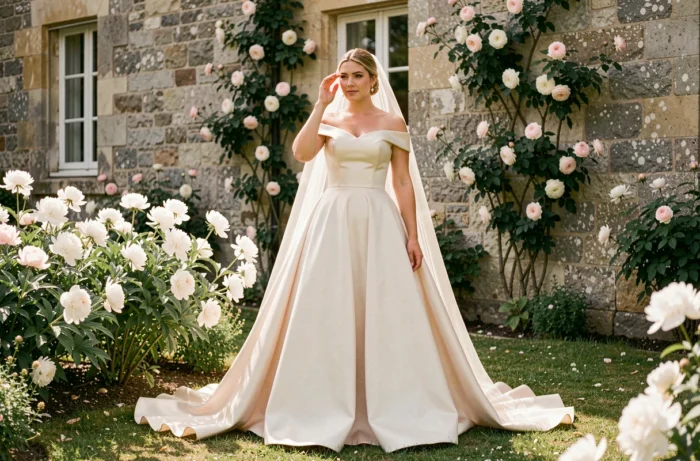
Wedding trends evolve each year based on the concrete choices of couples: reception format, color palette, type of venue, budget considerations. In France, Insee estimates that 251,000 weddings will be celebrated in 2025, a volume that confirms the vitality of the sector while highlighting that each union is built with real constraints. Understanding the dominant trends allows for informed choices, not just aesthetic ones.
Quiet wedding: fewer guests, reallocated budget
The term quiet wedding refers to a reception intentionally reduced in the number of guests. The principle is not to spend less, but to redistribute the budget differently.
According to a sector survey reported by La Chartreuse, couples who choose this format redirect their spending towards the venue, the meal, or the staging. The guest list goes from around a hundred people to about fifty, sometimes fewer, and the budget per guest mechanically increases.
This format also changes the logistics. Fewer tables mean a simplified seating plan, a caterer working with a single menu rather than an option-based formula, and a smaller venue (often cheaper to rent). The savings are redirected to high-value items: a gourmet meal rather than a standardized buffet, a photographer available for a longer time, or a dense floral decoration in a limited space.
This choice is not universal. Large families or couples attached to collective celebrations may see it as a constraint. The quiet wedding works when both partners share the same vision of intimacy. Find the latest news on Mon Beau Mariage to follow the evolution of these reception formats throughout the season.
Wedding color palettes: sage green and muted tones replace pastels
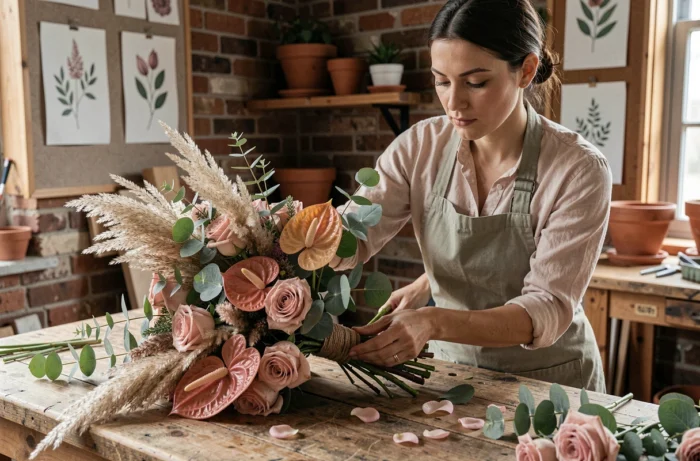
The dominant color in weddings this year is sage green, often paired with olive green. These shades work because they easily match with neutral bases (ivory, off-white, raw linen) without creating harsh contrasts.
The change from previous years is less about the color itself and more about how it is applied. Couples favor muted and saturated tones rather than diluted pastels. Terracotta, ochre, and navy blue complete the palette when green alone is not enough to structure the atmosphere.
- Sage green pairs well with linen and raw wood for an organic and calming ambiance, suitable for both outdoor venues and vaulted halls.
- Terracotta adds warmth to autumn receptions and works well with artisanal ceramics and dried flowers.
- Navy blue, used in accents (napkins, stationery, ribbons), creates an elegant contrast on a light base without weighing down the decoration.
The choice of color has a concrete impact on the budget. A sage green tablecloth costs more than a standard white one. Anticipating the palette from the choice of venue and caterer avoids last-minute surcharges on textile elements.
Natural materials and minimalist wedding decoration
Wrinkled linen, cotton, cotton gauze, raw wood, and artisanal ceramics make up the decorative vocabulary of the season. These materials share a common point: they do not require perfect finishing to produce their effect. Controlled imperfection becomes an aesthetic choice, not a flaw.
In practice, this approach simplifies certain steps in the preparation. A wrinkled linen table runner does not require ironing. Irregular ceramic candle holders do not need to be perfectly matched. The final result relies on the coherence of the palette rather than the symmetry of each element.
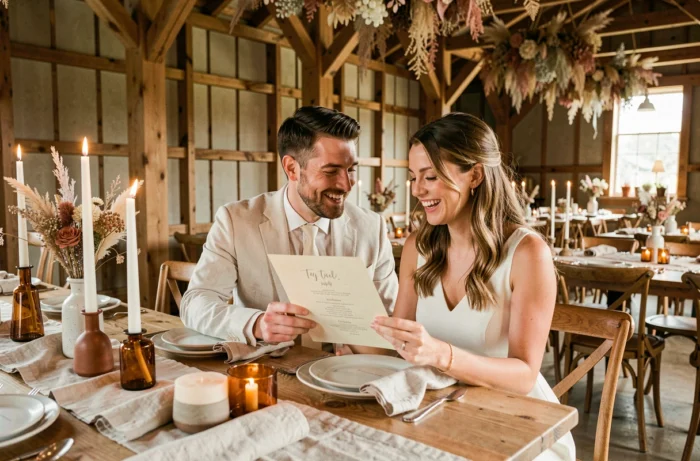
Spaces gain in airiness. Bulky centerpieces give way to low compositions, and overloaded floral arches are replaced by lighter structures. This trend reduces the floral bill, often one of the highest items in the decoration budget.
Seasonal flowers and short supply chains
Eco-responsibility in floral decoration comes from a concrete choice: favoring seasonal flowers grown locally. Peonies in December or dahlias in March require imports that increase costs and carbon footprint.
Working with a florist who sources locally also allows for adapting compositions to what is actually available. The result is often more varied and textured than a standardized arrangement ordered from a catalog.
Logistics of travel: a concrete environmental angle
The environmental impact of a wedding is not limited to biodegradable plates or local flowers. Guest travel often represents the heaviest carbon footprint of a reception, a perspective rarely addressed in inspiration guides.
A wedding with fifty people where half the guests fly generates a larger footprint than one with a hundred guests who drive from the same region. The choice of venue, its proximity to public transport, and the availability of on-site accommodation become full-fledged selection criteria.
Some couples offer a collective shuttle service from the nearest train station or group accommodations in the same establishment to limit individual trips. These logistical choices, less photogenic than a floral arch, have a measurable effect on the overall footprint of the event.
Phone-free ceremonies and immersive experiences
The concept of “unplugged” weddings is gaining ground. The principle: ask guests to put away their phones during the ceremony, sometimes throughout the cocktail hour. The goal is twofold: to ensure the quality of professional photos and to change the atmosphere by eliminating raised screens.
Feedback from couples who have tried this format converges on one point: guests are more present and interactions are more spontaneous. The professional photographer works without interference, and the images are not cluttered by outstretched arms in the front row.
On the entertainment side, mobile bars (cocktails prepared in front of guests, often in a converted vehicle) are gradually replacing the traditional fixed bar. They create a roaming gathering point that energizes movement between reception spaces.
This year’s wedding trends reflect a shift towards more deliberate choices. The quiet wedding, raw materials, reduced transport footprint, and disconnected ceremonies share a common thread: each expense is determined by what the couple truly values, not by an inherited model.