
An apartment under the roof, a night when the indoor temperature never drops below 26 °C, and waking up feeling as though you haven’t rested: we all know the scenario. Everyday health isn’t shaped by what we eat or how often we go to the gym alone.
It also depends on the environment in which we sleep, work and recover. The usual recommendations—eat better, stay active, manage stress—still apply, but they lose some of their impact when basic conditions, such as sleep quality or hydration, are undermined by an overheated home or a poorly managed work schedule.
Well-being and nighttime heat: adapting your habits when your home won’t cool down
Heatwaves are often seen as exceptional events. Yet the French Ministry of Labour points out that heat-related fatal accidents have been recorded outside heatwave periods. Nighttime recovery is directly affected when temperatures remain high after sunset, a common occurrence in poorly insulated urban homes or those facing south.
If you live in a studio without cross-ventilation or work in an open-plan office beneath a glass roof, the usual advice (“sleep in a cool room”) isn’t enough. You need to make practical changes to your routine. Regular access to water, breaks in cool spaces and shifting physical activity to cooler hours become essential ways to protect your health—not optional comforts.
Several resources, including those available on the La Mutuelle De Santé health website, can help you better understand how these environmental factors affect overall health and related preventive measures.
Sedentary lifestyles and physical activity: what the WHO recommendations really change
An analysis published in The Lancet Global Health on 25 June 2024, based on data collected through 2022, shows that the proportion of adults who are not active enough has risen since 2010. Physical inactivity worldwide isn’t declining—it’s increasing.
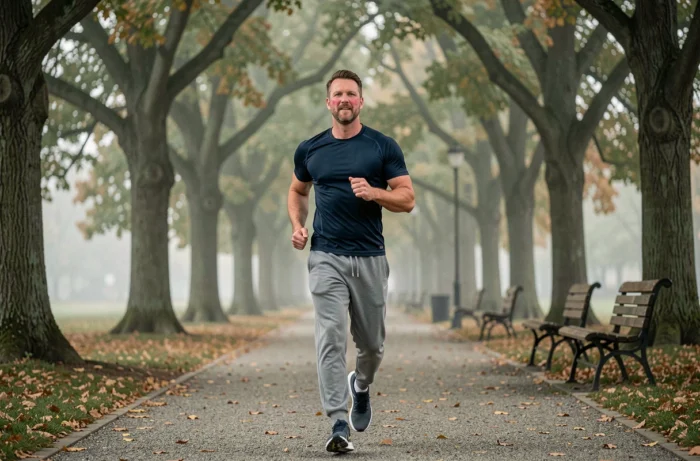
The WHO explains that replacing sedentary time with physical activity, even light activity, brings measurable benefits. Walking to get a coffee, standing up every hour or taking the stairs: these small actions count. The organization does not set a maximum daily limit for sedentary time, as there is not enough evidence to establish a precise threshold, but it emphasizes one simple principle: all activity counts, at every age.
Getting active without a workout plan: practical habits that work
You don’t need a gym membership to break up sedentary time. A few habits built into your daily routine can already make a difference.
- Taking a 15-minute walk after lunch can reduce afternoon drowsiness and aid digestion
- Alternating between sitting and standing at your desk (if your setup allows) can ease the lower-back tension that builds up throughout the day
- Choosing active transport for short journeys, on foot or by bike, rather than saving all your exercise for a single weekly workout
A common pitfall is trying to make up for a whole week of sitting with an intense workout at the weekend. Regular light movement offers better protection than a single burst of strenuous exercise.

Sleep and diet: two pillars that interact more than we think
Sleep and diet are often treated as separate topics. In practice, what we eat in the evening directly affects sleep quality, while poor sleep can lead us to consume more fast-acting sugars the next day. It’s a self-perpetuating cycle.
A meal that is too heavy or eaten too late keeps digestion working during the first few hours of sleep. Body temperature, which needs to drop to make it easier to fall asleep, stays elevated. In a home that is already difficult to cool down, the effects add up and nighttime recovery suffers twice over.
Eating habits that support quality sleep
Eating cooked vegetables, whole grains and a moderate portion of protein in the evening can make digestion easier without causing a late spike in blood sugar. Avoiding screens and heavy meals in the two hours before bed is one of the simplest changes to make.
Hydration also plays a direct role. Drinking enough water throughout the day, without waiting until you feel thirsty, helps prevent headaches and chronic fatigue that can make it harder to assess your own health.
Everyday mental health: looking beyond individual responsibility
In France, mental health was designated a Great National Cause in 2025. This political decision reflects a clear reality: psychological difficulties are not solely a matter of personal stress management. Working conditions, housing, social isolation and access to care matter just as much as relaxation techniques.
When you’re dealing with a noisy home, a long commute and a sedentary job, generic advice (“meditate for ten minutes every morning”) loses its impact. The practical challenge is to identify the environmental factors you can change: reduce a source of noise, create a space to take a break or maintain regular social contact, even if it’s limited.
- Maintaining a regular circle of contact, even a small one, helps protect against isolation, whose effects on health are well documented
- Limiting screen scrolling before bed helps protect both sleep and mental well-being
- Prioritizing prevention (health check-ups and consultations before symptoms take hold) over seeking help only once problems have become entrenched

Everyday health is built in the margins: the quality of the air we breathe at night, the glass of water we drink before we feel thirsty, the ten-minute walk after lunch. These small adjustments, repeated every day, matter more than a dramatic resolution abandoned after three weeks. The first step is to take an honest look at your own living conditions, then work on one thing at a time.