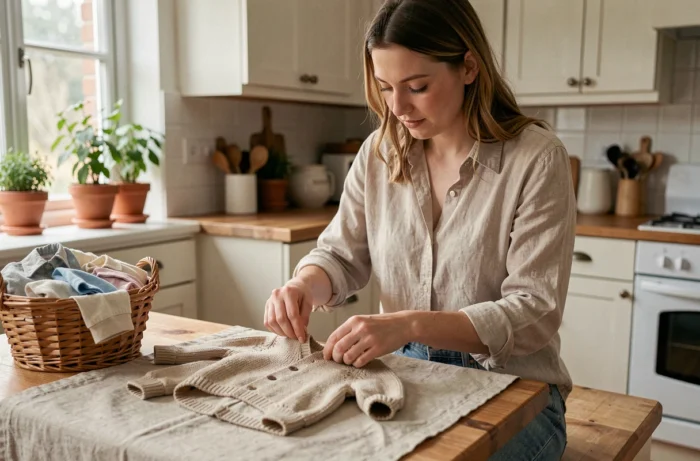
A baby changes size every few weeks during their first year. Most bodysuits and pajamas are worn for barely a month before they become too small. Buying these items second-hand means getting nearly new clothes, often washed only a few times.
The real question isn’t whether second-hand clothes are suitable for dressing a baby every day, but how to organize your purchases to avoid accumulating piles of unused clothes at every growth stage.
Second-hand baby wardrobe: think in terms of rotation, not bundles
The usual temptation is to buy a complete bundle for each size range. At a clothing swap or on an online platform, a bundle of twenty 3-month-size items can seem like a bargain. In practice, a baby wears no more than two or three outfits a day and stays in each size for just a few weeks.
Rather than filling an entire drawer, five to seven items per size are enough to cover a week with a normal laundry routine. This includes bodysuits, pajamas, and a few tops. The rest takes up space, and many items stay folded without ever being worn.
Have you noticed that some baby clothes come out of the closet still bearing their original tags? That’s exactly the problem a rotation system solves. It’s better to buy a small bundle in the next size when your baby starts to outgrow their current clothes than to store three sizes in advance. If you’re looking for items sorted by size and condition, you can contact the Les Bébés Fringueurs website to narrow down your search based on your child’s actual needs.
Quality criteria for choosing second-hand baby clothes
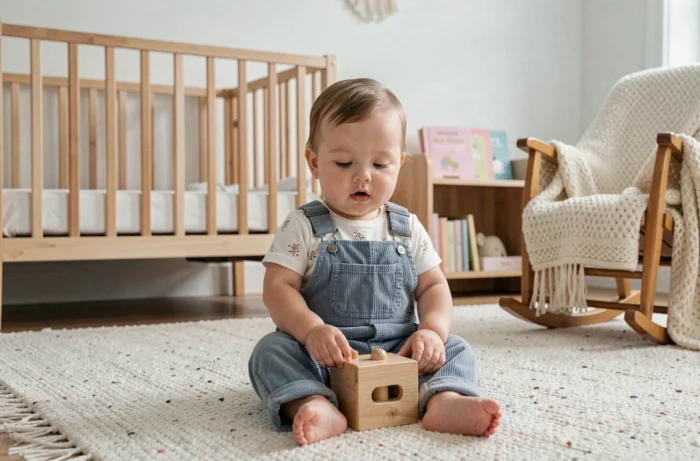
In an online photo or a thrift-store bin, a garment can look fine. A few quick checks can make the difference between an item that will last and one that’s ready to become a cleaning rag.
Snaps, seams, and elastic: the areas that really wear out
Snaps are the first thing to check. Open and close each snap. On a bodysuit worn by two children, the crotch snaps wear out quickly. If they no longer fasten securely, the bodysuit may come undone in the middle of the night.
Shoulder and neckline seams take a lot of strain from repeated dressing. Give them a gentle tug. A loose thread or a gaping seam is a sign that a garment is nearing the end of its life. Waistbands on pants and pajamas also lose their stretch. A slack elastic waistband is not easy to repair on such a small garment.
Best fabrics for a baby’s skin
Cotton remains the best choice for everyday wear. It stands up to frequent washing and dries quickly. A second-hand cotton garment is often softer than a new one because the fibers have softened with repeated washing and manufacturing chemical residues have been removed.
Avoid garments made entirely of synthetic fabric for base layers (bodysuits, pajamas). Polyester holds onto odors and can feel uncomfortably warm. Cotton-elastane blends work well if the cotton content is much higher than the synthetic content.
- Check that the snaps fasten securely and the elastic still has tension, especially at the crotch and waist
- Run your hand over the neckline and shoulder seams to check for early signs of wear
- Choose cotton or cotton-rich blends, which stand up better to repeated washing and stay soft against a baby’s sensitive skin
- Check for stains: a yellowed milk stain that remains after washing usually won’t come out, while a superficial gray mark often washes away at 40 °C
Online or in-store second-hand shopping: where to find the best value
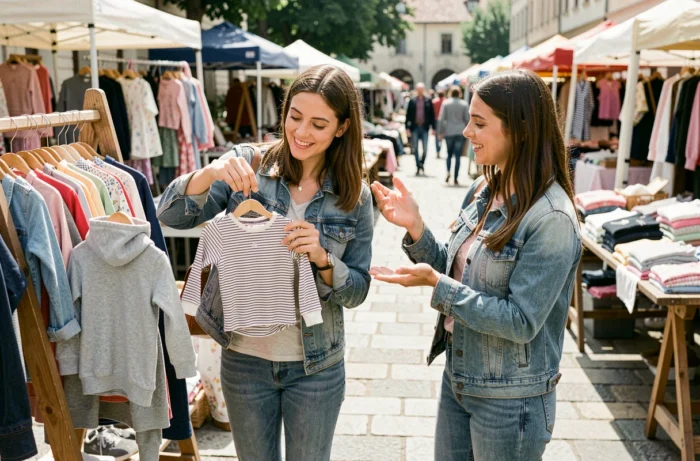
The price of second-hand baby clothes varies widely depending on where you shop. At a community clothing exchange or local swap, a bodysuit may cost just a few cents. On a peer-to-peer resale platform, the same bodysuit from a well-known brand can cost almost as much as a new budget item.
Comparing the price with the garment’s actual condition and how long it can be worn is more reliable than assuming second-hand is always cheaper. A low-priced bundle from a yard sale that contains worn-out items can end up costing more than a handful of carefully selected pieces in good condition.
Some retailers are also developing their own take-back programs, with dedicated sections in their stores. The benefit for parents is that they can inspect the clothes in person, check the snaps and seams, and sometimes take advantage of return policies. Clearer product traceability offers peace of mind, especially for a first second-hand purchase.
Caring for and washing second-hand baby clothes
Every second-hand garment should be washed before it’s worn. A 40 °C cycle with a gentle, fragrance-free detergent removes any residue and potential allergens. There’s no need to boil or disinfect the clothes: a regular wash is enough for fabric garments with no visible mold.
Tumble-drying speeds up wear on fibers and elastic. For items that have already been through a few wash cycles, the dryer can make the difference between three more months of wear and an elastic waistband giving out after two weeks. Air-drying better preserves snaps and seams.
Why does this detail matter so much? Because ease of care determines whether a garment can be passed on or resold after your child has outgrown it. Clothes that are easy to wash and dry are easier to resell than items that require special care. This completes the cycle and reduces the true cost of each item.
- Wash every second-hand item before its first use at 40 °C with fragrance-free detergent
- Avoid tumble-drying items with elastic and snaps, which lose their shape more quickly when exposed to heat
- Store outgrown items in a bag labeled by size so you can resell or donate them promptly instead of letting them pile up
One final point that’s often overlooked: dropping clothes off at a textile collection point doesn’t guarantee they’ll be reused. Sorting facilities are under pressure, and some of the collected textiles are recycled into materials rather than reused. For baby clothes that are still in good condition, donating them directly or selling them locally is the surest way to give them a genuine second life.