The autumn-winter 2026-2027 shows have set clear directions, but translating them into a real wardrobe requires a more refined selection process than merely spotting trends. Building a unique style this season involves understanding materials, volumes, and sustainability constraints that are redefining the wardrobe.
Technical fabrics and artisanal weaves: the true gauge of this fashion season
The collections presented in recent months confirm a shift. The choice of fabric now takes precedence over cut in the hierarchy of style decisions.
Dense-weight wools and boucle knits are making a strong comeback in key pieces (coats, long cardigans, structured skirts). This tactile choice adds depth to otherwise minimalist silhouettes.
On the fiber side, European regulations on textile traceability are pushing brands to document the exact composition of their pieces. In France, the so-called “fast fashion” law provides for an environmental bonus-malus system that could alter the labeling and pricing of high-impact clothing. In practical terms, prioritizing natural or recycled materials is no longer just an ethical gesture; it’s also an economic bet on pieces whose residual value will remain stable.
To delve deeper into the season’s directions and cross inspirations, the La Petite Revue website offers a regular overview of ongoing style movements.
Autumn-winter 2026 colors: three palettes that structure a look
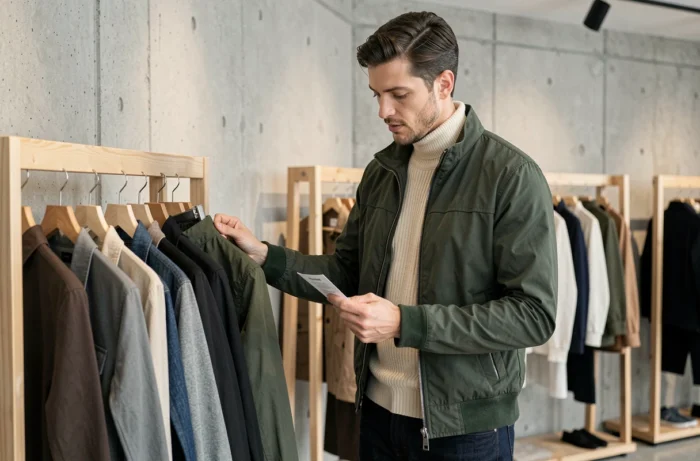
This season’s color trends are divided into three distinct families. Each carries a different style intention, and mixing them without logic dilutes the desired effect.
- Saturated dark palette: deep burgundy, midnight blue, forest green. These shades work as a base on a coat or wide trousers. They replace black without sacrificing sobriety.
- Vivid accent palette: bright red, burnt orange, mustard yellow. These colors are used on a single piece per outfit (a sweater, a scarf, a bag) to create a focal point without overwhelming.
- Textured neutral palette: ecru, beige, heather gray. Their interest lies entirely in the material. A crumpled linen ecru is nothing like a smooth polyester ecru. On these shades, the quality of the fabric is immediately apparent.
The classic trap is to accumulate bright colors spotted on the runways. A personal style is built by choosing a dominant palette and injecting, at most, a contrasting accent.
Silhouettes and volumes: adopting the season’s cuts without losing your guiding line
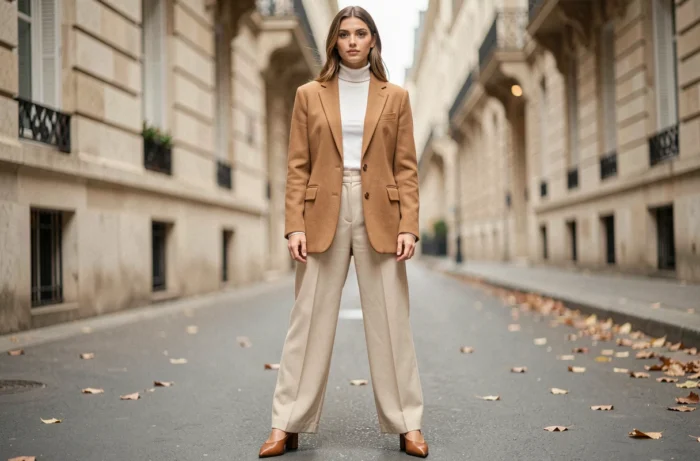
Structured shoulders remain a strong marker of the autumn-winter collections. However, we are observing a shift towards slightly dropped shoulders on casual pieces (oversized blazers, flannel shirts), while coats maintain a sharp silhouette.
Midi length, between the knee and ankle, dominates skirts and dresses. This proportion works particularly well with block-heeled boots, creating a visual balance that shorter or maxi lengths do not achieve as easily.
Layering: the method that makes the difference
Layering remains the most powerful stylistic lever to individualize an outfit. The technical rule can be summed up in one sentence: each visible layer must differ in texture or weight.
A fine turtleneck under a chunky knit vest, under a waxed cotton trench. Three layers, three different textures. If two layers share the same material, the whole visually flattens.
The most versatile pieces for layering this season are the long sleeveless vest (worn over a shirt or a fine sweater) and the wool overshirt. These two formats allow for modulation between indoor and outdoor without changing the silhouette.
Second-hand and textile repair: an underutilized style lever
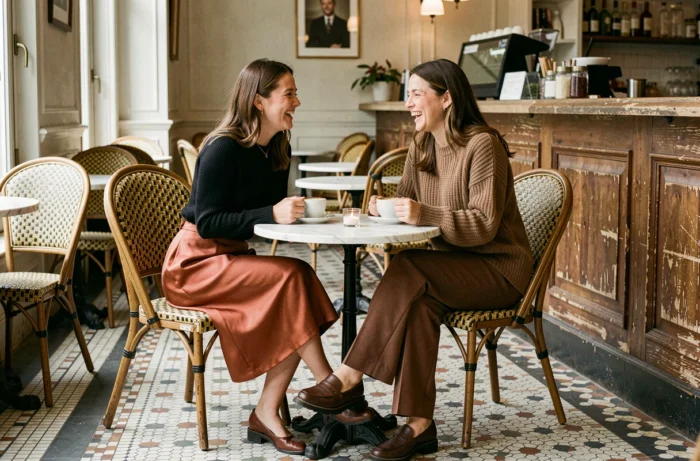
Recent surveys show an increase in the share of consumers reporting that they buy second-hand clothing, although this growth experiences fluctuations from year to year. For an autumn-winter wardrobe, second-hand opens access to pieces that are no longer available in stores: wool overcoats from past seasons, thick cashmere sweaters, patinated leather jackets.
Repairing rather than replacing also changes the relationship with clothing. A study conducted in France, the UK, and Italy reveals that many consumers have repaired a garment recently, but very few have used a repair service offered by a brand. The insufficient visibility of these services remains the main barrier.
Before discarding a piece whose cut you like, check if a tailor can intervene. A coat with a redone lining or jeans with reinforced inseams can gain several seasons of wear. This approach directly contributes to a unique style built over time.
Building a coherent wardrobe rather than following every fashion trend
The seasonal temptation pushes to accumulate isolated pieces that do not communicate with each other. An effective wardrobe relies on a core of five to seven strong pieces that combine effortlessly.
- A structured coat in the chosen dark palette (burgundy, midnight blue, or forest green)
- Two knit bases of different weights (a fine turtleneck, a textured sweater)
- A wide wool or corduroy trouser
- An overshirt or long vest for layering
- A signature accessory (bag, belt, or scarf) in a bright color that runs through the outfits
This foundation absorbs micro-trends without distorting. Adding a printed midi dress or a blazer with marked shoulders becomes an enhancement, not a reconstruction. The coherence of the wardrobe defines the style, not the number of pieces purchased.
The durability of a garment, its textile quality, and its ability to integrate into varied outfits are the three filters to apply before any purchase this season. A well-thought-out, tightly curated wardrobe in terms of materials and colors produces a sharper style effect than any accumulation of trends.