
The way an electrical panel is sized determines whether an installation can accommodate future needs without rewiring. Choosing the right equipment to optimize your electrical installation is about more than ticking off a list of components: it means balancing current requirements with the panel’s genuine capacity for expansion.
Size an electrical panel for future expansion without oversizing it
The NF C 15-100 standard recommends keeping around 20% of the spaces in the distribution panel free. This reserve is not just for peace of mind: it lets you add energy management modules, a charging station contactor or a dedicated circuit breaker for a photovoltaic system without replacing the panel.
A common mistake is to choose an oversized panel from the outset, with four rows for a three-bedroom apartment. The extra cost does not come from the panel itself, but from the longer connecting wires and supply busbars, which make maintenance more complicated. A two-row panel with 20% spare capacity is suitable for most homes up to four bedrooms, provided the circuits are distributed across correctly rated residual current devices.
To prepare for adding a charging station, simply run a suitably sized cable to the garage or parking area during construction or renovation, even if the dedicated circuit breaker has not yet been installed.
It is the cable run that is expensive to retrofit, not the module in the panel. We recommend the same approach for a potential photovoltaic connection: plan the route for the DC cable and leave space in the panel for the generation circuit breaker.
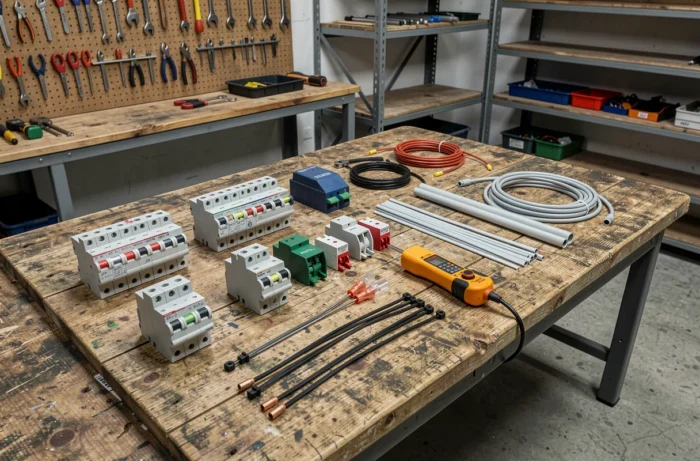
Among the equipment available from 100 000 Watts are modular components that make it possible to build a panel suited to each configuration without buying unnecessary modules.
Residual current devices and protection ratings: choices that shape the installation
The type of residual current device determines the reliability of the entire row it protects. Type AC is sufficient for lighting and standard outlets. Type A is required for the cooktop and washing machine circuits, as these appliances generate DC components that can interfere with a Type AC device.
For a charging station, a Type A residual current device combined with a residual DC detection device is required, unless the charging station already includes this detection. Checking the charging station’s technical specifications before choosing the residual current device helps avoid an unnecessary extra cost.
Distributing circuits across rows
Grouping circuits by function (lighting, outlets, heating) makes it easier to diagnose a fault if a breaker trips. However, NF C 15-100 mainly requires that no more than eight circuits be connected to a single residual current device. A well-organized row includes:
- A 30 mA residual current device at the head of the row, Type A or AC depending on the circuits it protects
- Branch circuit breakers rated for each circuit (10 A for lighting, 16 A for outlets, 20 A for dedicated circuits such as the oven or washing machine)
- A spare space for a future metering or load-shedding module, if energy management is planned
This layout makes adding a circuit as simple as clipping a circuit breaker onto the DIN rail, without disturbing the rest of the row.
Cable sizes and dedicated circuits: don’t confuse compliance with convenience
Cable size depends on the load and the length of the circuit. The standard reference sizes are well known: 1.5 mm² for lighting, 2.5 mm² for outlets, 6 mm² for a cooktop. What consumer guides rarely mention is how cable length affects voltage drop.
A 2.5 mm² cable is suitable for an outlet ten metres from the panel. Beyond twenty metres, voltage drop can cause some sensitive equipment to malfunction. Using 4 mm² cable for a long circuit costs just a few extra euros in copper and eliminates the problem.
Dedicated circuits to plan for
NF C 15-100 requires dedicated circuits for the oven, washing machine, dishwasher, tumble dryer and cooktop. Beyond this regulatory list, two circuits are worth planning from the outset:
- A 20 A circuit using 4 mm² cable to the utility room or garage for a future charging station, protected by a dedicated circuit breaker
- A circuit to the meter or subpanel for connecting a photovoltaic inverter, with a separate generation circuit breaker
- A dedicated circuit for the energy manager or load shedder, which needs its own power supply to avoid interference from current draw on neighbouring circuits
Planning cable routes costs little in a new build and avoids chasing walls or installing exposed cable trays during renovation.
Energy management and home automation: what actually connects to the panel
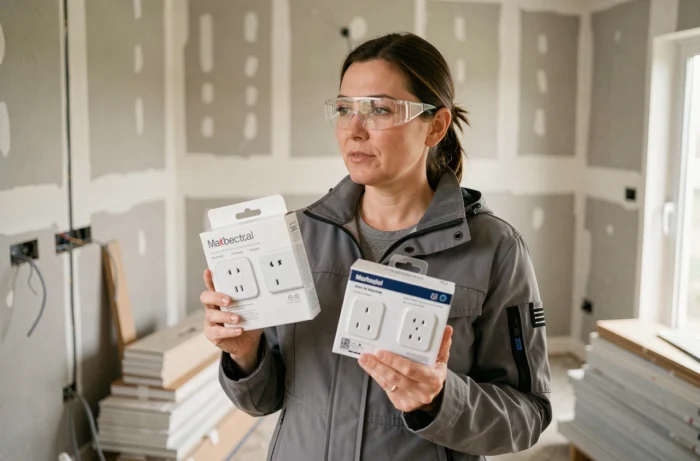
A home energy management system relies on modules installed in the panel, not just an app. The smart meter provides overall consumption data, but advanced control (load shedding, water heater scheduling, routing photovoltaic surplus) requires dedicated modular equipment.
A day/night contactor controls the water heater during off-peak hours. A load shedder temporarily switches off non-priority circuits when the contracted power limit is reached. Each of these modules takes up one or two spaces in the panel, which is why the spare capacity mentioned above is essential.
To route photovoltaic surplus, a decoupling relay and a module that measures the current fed into the grid are added to the panel. The setup remains compact if the panel was sized with the 20% reserve. Without this reserve, adding energy management means replacing the panel and redoing all the internal wiring.
Choosing equipment for an electrical installation depends less on component quality—which is generally reliable among manufacturers that comply with standards—than on the panel layout and planning cable routes in advance. A well-organized panel with spare capacity, cable sizes calculated for the actual length of each circuit, and spaces reserved for future modules: this combination is what makes an installation genuinely adaptable.


