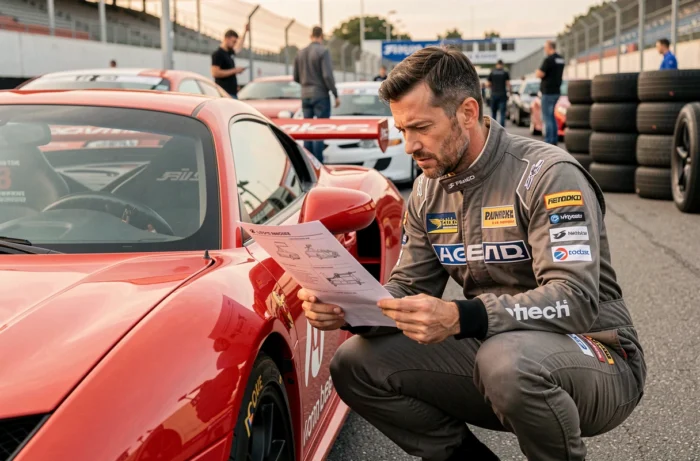
A race car is defined first and foremost by its compliance with the specific technical regulations for the discipline and category in which it will compete. The vehicle’s purchase price represents only a fraction of the actual cost of a season. Before comparing models, the first step is to identify the discipline (circuit racing, rallying, or open track days) and check with your local ASA (Association Sportive Automobile) to find out which regulations apply.
The real cost of a season: what the purchase price doesn’t cover
Comparing two race cars based only on their purchase price is like comparing two apartments without looking at the bills. The total cost of a season includes the license, entry fees for each event, mechanical preparation, personal equipment (racing suit, approved helmet, HANS device), and transport to circuits or rally stages.
For example, an FFSA license covers neither event entry fees nor the car’s technical preparation. These costs add up quickly: in some entry-level categories, entering five or six rounds of a regional rally can cost as much as the car itself. So before choosing your race car on Mikado Racing, you need to put together a full-season budget, not just a purchase budget.
Tires deserve particular attention. A set of semi-slick tires can wear out after just a few days of intensive driving. On a circuit, brake wear (pads and discs) increases significantly compared with road use. These recurring consumable costs should factor into your choice of model: a heavy, powerful car costs more to brake and fit with tires than a small, lightweight rear-wheel-drive car.
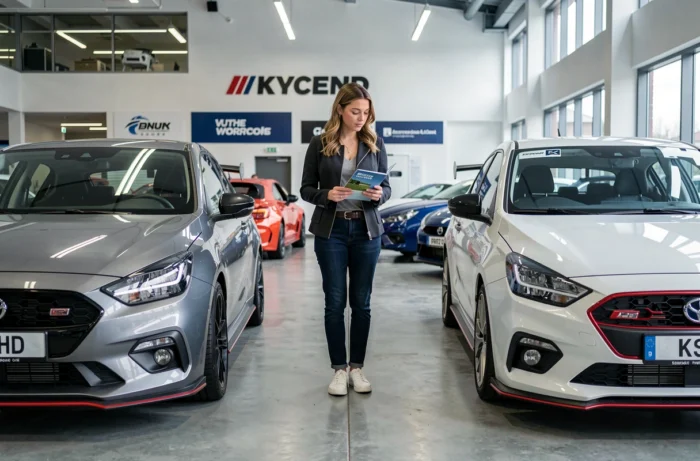
Power-to-weight ratio and discipline: two criteria that narrow down the options
The power-to-weight ratio remains the most decisive technical criterion for assessing a sports car’s performance in racing conditions. A lightweight car with a modest engine often delivers more thrills and better results than a heavy, overpowered vehicle.
The discipline you compete in narrows down the options even further. A rally on closed roads places different demands on a car than driving on a permanent circuit:
- In rallying, the car must withstand changing road surfaces, jumps, and uneven cornering forces. Suspension reliability and ground clearance matter just as much as outright power.
- On a circuit, aerodynamics, braking endurance, and chassis rigidity take priority. A low center of gravity and engine layout (mid- or rear-mounted) directly affect cornering behavior.
- For open track days, technical regulations are less restrictive, making it possible to use a road-going sports car with minor modifications (exhaust system, suspension, roll cage).
Checking that the vehicle complies with the regulations for the intended category is non-negotiable. A high-performance model that isn’t approved for the series you’re targeting is no use. The ASA can confirm whether the vehicle, required documents, and intended license meet the competition regulations.
Used race cars: what to check before buying
The used market is the most common entry point into amateur motorsport. A well-inspected used car can offer a level of preparation comparable to a new one, provided you know what to look for.
Mechanical history matters more than the mileage shown on the odometer. A rally car that has competed in two full seasons has endured mechanical stresses unlike those experienced by a road-going sedan with the same mileage. Key items to check include the condition of the roll cage and its homologation date, suspension bushing wear, play in the steering, the condition of the harness (harnesses have an expiration date), and whether the onboard fire extinguisher complies with regulations.
A roll cage with expired homologation makes the car unusable in competition. Replacing it is a significant expense that should be factored into price negotiations. Likewise, an expired harness must be replaced before the first motorsport technical inspection.
Insurance and track coverage
Insurance is often overlooked. Some car insurance policies explicitly exclude damage sustained on a circuit, including during untimed open track days. Races and timed sessions require specific coverage that must be purchased separately. Before buying a dedicated race car, check the coverage for both the vehicle and the driver to avoid financial surprises in the event of an incident.
Motorsport on a limited budget: renting as an alternative
Buying isn’t the only option. Renting a prepared race car lets you compete in events or attend training sessions without tying up a large amount of capital. This option generally includes mechanical preparation, transport, and sometimes on-site technical support.
For beginners, renting offers a valuable learning opportunity: it lets you try different types of vehicles and disciplines before committing to a purchase. Renting different models for a season gives you a clear idea of your preferences in terms of size, drivetrain, and power.
Rallying offers regulated entry routes designed to keep costs down. Some categories require lightly modified production models, reducing both the purchase price and preparation costs. Since rules and licensing requirements can change from one season to the next, it’s important to check with the federation every year.
Choosing a race car depends less on the model you’ve always dreamed of and more on finding the right fit between the technical regulations, a realistic season budget, and a clearly defined sporting goal. A modest car entered regularly will teach you more than a high-performance machine left in the garage because there’s no budget to race it.


