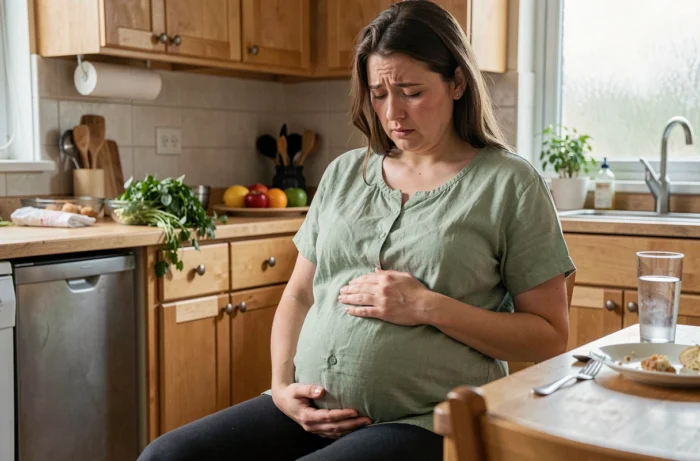
In the third trimester, a burp that smells like rotten eggs after a meal can come as a surprise, or even cause concern. This type of sulfur burp is caused by hydrogen sulfide production in the digestive tract, a process amplified by the physiological changes of late pregnancy. In most cases, the symptom is harmless and related to the mechanics of pregnancy itself. However, certain combinations of symptoms warrant prompt medical advice.
Progesterone and uterine pressure: how digestion is affected in the third trimester
Nausea is often associated with the first trimester, and it’s easy to forget that late pregnancy can also take a toll on the digestive system, albeit in different ways. Progesterone levels remain high until delivery and slow intestinal transit and gastric emptying. Food stays in the stomach and small intestine for longer, giving bacteria in the colon more time to ferment food residues.
This hormonal slowdown is compounded by a purely mechanical factor. In the third trimester, the enlarged uterus pushes the stomach upward and reduces its capacity. Food can more easily flow back into the esophagus, carrying with it gas produced further down the digestive tract. This explains why sulfur burps in late pregnancy often occur after a large meal or one rich in sulfur-containing proteins.
The result is a combination of reflux, bloating, and foul-smelling burps that may not have occurred in earlier trimesters. This type of digestive discomfort is common during pregnancy and, on its own, does not indicate a medical problem.

Sulfur-rich foods and dietary habits that make smelly burps worse
Not all burps smell like rotten eggs. That distinctive odor comes specifically from hydrogen sulfide (H₂S), which is produced when intestinal bacteria break down sulfur-containing compounds. Some foods contain far more of these compounds than others, and pregnancy can make the digestive system less tolerant of them.
Common dietary triggers
- Cruciferous vegetables and alliums: Cabbage, broccoli, cauliflower, garlic, and onions are rich in sulfur-containing compounds. Their fermentation in the colon directly produces H₂S, especially when transit is slow.
- Eggs, red meat, and legumes: These protein sources contain sulfur-containing amino acids (methionine and cysteine) that, when poorly digested, contribute to the production of foul-smelling gas.
- Carbonated drinks and eating too quickly: Swallowed air (aerophagia) combines with fermentation gases and increases the frequency of burping, though it does not necessarily change the odor.
You can ease the discomfort by eating smaller, more frequent meals, taking your time, and temporarily limiting the most fermentable foods. For example, having a light dinner with little animal protein often reduces sulfur burps overnight or the following morning.
Gastroenteritis, food poisoning, or simple discomfort: telling the causes apart
A single sulfur burp, however unpleasant, does not point to any specific cause. Other accompanying symptoms are what help guide the diagnosis.
Viral gastroenteritis or food poisoning generally cause foul-smelling burps along with diarrhea, severe nausea, and sometimes a fever. During pregnancy, diarrhea combined with vomiting can quickly lead to dehydration. Infrequent or dark urine, pronounced thirst, dizziness, or unusual weakness should prompt you to contact your doctor or midwife without delay.
A bacterial infection (Salmonella, Campylobacter) can also cause sulfur burps before diarrhea begins. This delay can sometimes lead pregnant women to dismiss the symptom as a minor discomfort of late pregnancy. If foul-smelling burps start suddenly alongside abdominal cramps and marked fatigue, it’s best to seek medical advice promptly rather than wait.
Warning signs in late pregnancy: when burps may point to something else
The real medical concern is not the burp itself, but what may accompany it without you realizing there’s a connection. Certain warning signs in the third trimester should never be dismissed as a simple digestive problem.
Pain under the right ribs or in the upper abdomen
Severe pain in the upper abdomen is not always indigestion. In late pregnancy, it can be a sign of HELLP syndrome, a serious complication affecting the liver and blood platelets. HELLP syndrome can occur even without obvious high blood pressure, making it particularly easy to miss. A normal blood pressure reading at home is not enough to rule it out.
Nausea combined with headaches and vision problems
Unusual nausea that comes on suddenly in the third trimester, combined with a severe headache or vision problems (flashing lights or blurred vision), requires urgent medical attention. These symptoms may indicate pre-eclampsia or related complications, even if the pregnant woman assumes her nausea is due to an ordinary digestive problem.
What to tell your doctor
- Sulfur burps accompanied by persistent diarrhea (lasting more than two days) or repeated vomiting that makes it impossible to stay hydrated
- Pain under the right ribs or across the upper abdomen, especially if it does not ease with rest
- Severe headaches, vision problems, or sudden swelling of the face and hands
- A fever above 38 °C, even if it is brief
- No fetal movements felt after 26 weeks
An isolated digestive symptom in an otherwise healthy pregnant woman rarely requires emergency care. However, two symptoms occurring together change the picture: as a practical rule, contact your maternity unit whenever a digestive symptom is accompanied by a symptom affecting another part of the body (headache, vision problems, swelling, or chest pain).
In the vast majority of cases, burps that smell like rotten eggs are simply the result of slower digestion and pressure on the stomach. Eating smaller meals, limiting sulfur-rich foods, and taking your time can often reduce how frequently they occur. The main concern is less the burping itself than the symptoms that accompany it, particularly in the third trimester, when certain digestive symptoms may mask complications that are best identified early.


