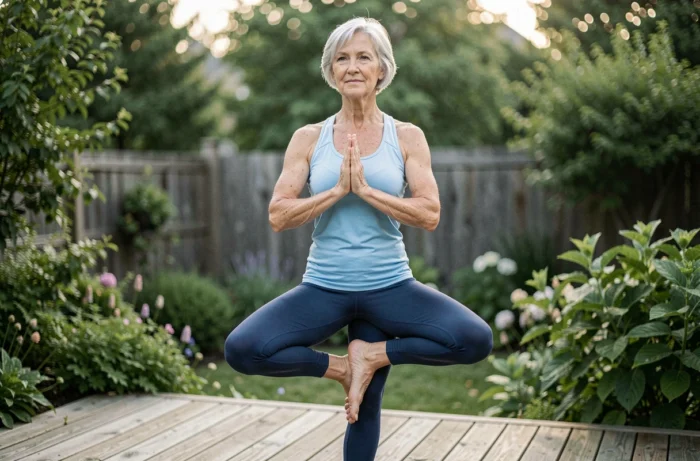
In France, the proportion of the population aged over 65 continues to grow, bringing with it the question of staying fit and independent over the long term. Prevention policies are evolving and support programs are multiplying, but access to them remains uneven across regions. Understanding what works, what remains unclear and what depends on each individual’s circumstances makes it easier to make informed choices in everyday life.
Early detection of frailty: the ICOPE program and its limitations
Before discussing exercise or diet, one often-overlooked step deserves attention: identifying the first signs of frailty. The ICOPE program, led by the World Health Organization, proposes assessing several functions (mobility, memory, nutrition, vision and hearing) to detect decline early and guide people toward appropriate interventions.
The strength of this approach lies in its simplicity. It is not an extensive medical assessment, but a quick questionnaire that can be completed during a consultation or even at home. Detecting hearing loss or a balance problem at an early stage can change a person’s health trajectory.
Publishing health advice for seniors without mentioning this type of screening means treating symptoms without looking for their causes. The challenge lies in rolling it out: not all general practitioners offer this assessment yet, and patients remain largely unaware of the program.
Adapted physical activity: medical prescriptions and actual funding
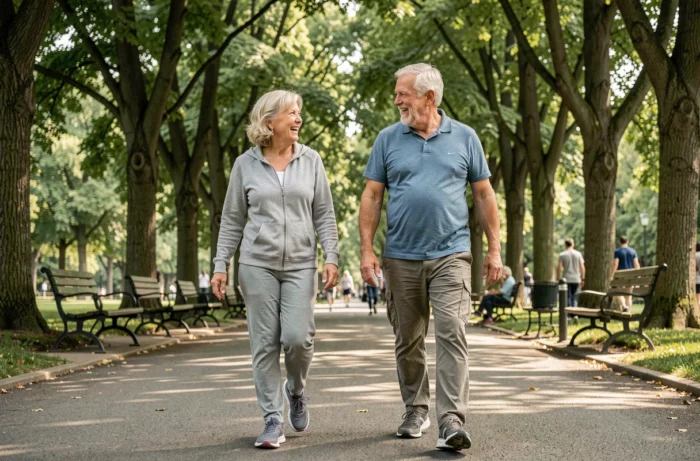
Physical activity is the most thoroughly documented pillar of healthy aging. Walking, swimming, gentle exercise, gardening: there is no shortage of options. The real question, which is asked less often, is whether people can actually access supervised activities.
For several years, doctors have been able to prescribe adapted physical activity (APA) for certain patients with chronic conditions, risk factors or declining independence. This prescription gives them access to support from qualified professionals.
APA sessions are not generally covered by the French National Health Insurance system. Funding depends on the patient’s supplementary health insurance and local programs, creating significant disparities from one department to another. Maisons Sport-Santé can help people find suitable activities, but they are still unevenly distributed across the country.
What this means in practice
For someone living in a city, finding a gentle exercise class supervised by a trained professional is relatively straightforward. In rural areas, the options may be limited to walking independently, without any follow-up.
Checking what is available locally before committing helps avoid disappointment. A call to the local town hall, pension fund or Maison Sport-Santé is often enough to get an overview of the resources available.
Vaccination for seniors: the schedule has changed
Prevention is not limited to exercise and diet. Vaccination recommendations for people over 65 have changed in recent years, and many people are unaware of this.
In addition to the annual flu shot, shingles and pneumococcal vaccines should now be considered from age 65. Shingles in particular can cause pain that is sometimes debilitating and lasts for several months. Vaccination significantly reduces this risk.
Each person’s vaccination schedule depends on their medical history and current treatments. A check-in with a family doctor or pharmacist can help determine which vaccines are appropriate and how often they should be given.
A blind spot in prevention
Public information campaigns on vaccination for seniors still focus largely on flu and Covid-19. Other recommended vaccines remain underused due to a lack of information. Bringing up the subject during a consultation, even when there are no symptoms, is one of the simplest and most effective ways to protect quality of life.
Diet and cognition after 65: what research struggles to distinguish
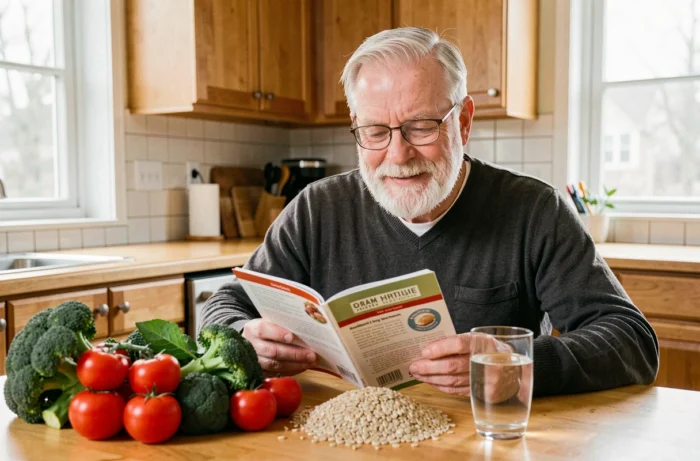
A balanced diet features on every list of tips for healthy aging. Fruit, vegetables, protein and hydration: the basics are well known. What is less clear is how difficult it is to isolate the specific effect of diet on cognitive decline.
Several diets (Mediterranean, MIND) have been associated with slower brain aging in observational studies. However, there is not enough evidence to establish a direct causal link between a specific diet and dementia prevention. The factors overlap: someone who eats well is often also more active, has stronger social connections and receives better medical care.
This does not mean diet is not a valuable way to support health. It is a reminder not to attribute benefits to it that have not been demonstrated on their own. Eating a varied diet in sufficient quantities (malnutrition affects a significant proportion of seniors) remains a practical and achievable goal.
Social life and cognitive stimulation: two often-underestimated factors
Social isolation accelerates physical and cognitive decline. This link is well documented, but the proposed solutions are often vague: “get out more,” “see people,” “sign up for an activity.”
In practice, maintaining an active social life after 65 means overcoming several barriers:
- Mobility, which determines whether someone can travel to social venues, especially in areas with limited public transport
- Hearing and vision, as uncorrected deterioration can lead people to withdraw socially long before they realize it
- The digital divide, which prevents some seniors from using communication tools and finding information about local activities
Cognitive stimulation does not rely solely on memory exercises. Reading, playing cards, learning a language or tending a garden: any activity that engages attention and planning helps maintain brain function.
The most comprehensive prevention programs, such as ICOPE, also address social and cognitive well-being alongside mobility and nutrition. Treating these aspects separately means artificially dividing up a whole whose parts interact.
Staying fit after 65 is not simply a matter of mechanically following a list of good habits. Healthy aging depends as much on real access to prevention programs as it does on individual motivation.
Find out what is available nearby, ask your doctor the right questions and do not wait for the first signs of frailty before taking action: long-term independence depends on bridging the gap between the information available and putting it into practice.


