
The alternator converts the engine’s mechanical energy into electrical current to power the vehicle’s electrical system and recharge the battery. When this part fails, replacement is essential, and choosing between a new or used alternator affects the cost, the repair’s lifespan and compatibility with the vehicle.
Diagnosis before replacement: is the alternator really the problem?
Replacing an alternator that isn’t faulty is a waste of money. On vehicles equipped with an intelligent battery sensor (IBS), a faulty battery, poor ground connection or corroded cable can disrupt charging even when the alternator itself is working properly.
HELLA recommends checking these components and reading the diagnostic data before replacing anything. A communication fault between the IBS sensor and the engine control unit can trigger a charging warning light even when the alternator is functioning normally.
So before choosing between a new or used alternator, the first step is to carry out a full diagnosis of the electrical system, ideally using a tool that can read charging parameters in real time.
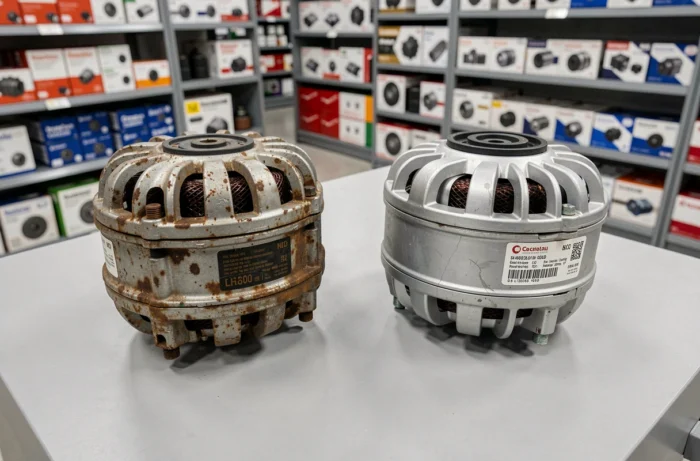
New alternator: manufacturer warranty and direct compatibility
A new alternator comes straight from the factory, with all its components manufactured to original specifications: rotor, stator, voltage regulator, diode bridge and pulley. None of its parts have been subject to prior wear.
When a new alternator is the only sensible option
On newer vehicles, electronic management adjusts the charging voltage according to the battery’s condition and the vehicle’s energy strategy. A new alternator calibrated for this system ensures immediate compatibility with the onboard electronics.
For vehicles with high electrical demands (constant air conditioning, extensive multimedia equipment, frequent towing), a new part provides amperage that meets the manufacturer’s requirements without compromise. The price is higher, but its expected lifespan generally covers several years of intensive use.
Used alternator: immediate savings and points to watch
A used alternator comes from a vehicle that has reached the end of its life or been in an accident. It has already been used, sometimes for an unknown length of time, and its internal condition is difficult to assess without taking it apart.
What to check before buying
- The exact part number, which must match the vehicle model, engine and pulley type (overrunning or fixed)
- The visible condition of the commutator, brushes and connector: signs of overheating, corrosion or excessive play indicate advanced wear
- The donor vehicle’s mileage, if available, to estimate the alternator’s remaining lifespan
- Whether the seller offers a commercial warranty
A used alternator costs considerably less than a new one. This saving makes sense for an older vehicle with low resale value, or as a temporary fix while waiting for a permanent replacement.

Reconditioned alternator: a balance between price and reliability
Reconditioning (or refurbishing) involves dismantling a used alternator, cleaning each component, replacing wear parts (brushes, bearings, regulator, diode bridge) and then testing the complete unit under real charging conditions. A quality reconditioned alternator is laboratory-tested before being resold.
Compared with an unrefurbished used alternator, a reconditioned unit provides traceability for the parts replaced. Compared with a new one, it costs less while offering a comparable lifespan for critical components.
How to identify a thorough reconditioning job
- The seller lists the parts replaced and the tests carried out (output voltage, regulation, amperage)
- The part comes with a commercial warranty, often lasting several months
- The housing shows signs of industrial cleaning, rather than just a cosmetic coat of paint
A poor reconditioning job may involve nothing more than replacing the brushes and giving the unit a superficial clean. If the seller provides no details about the tests performed, treat this as a warning sign.
Statutory and commercial warranties: what French law says
Warranty coverage varies depending on the seller’s status. When a private individual buys an alternator from a professional seller, the statutory warranty of conformity applies in addition to any commercial warranty that may be offered.
French law makes professional sellers liable for lack of conformity that becomes apparent within two years of purchase. For a used item, the presumption that the defect existed at the time of sale is limited to twelve months. This distinction directly affects the burden of proof in the event of a dispute.
These protections do not apply in the same way to private sales. An alternator bought through a private-sale platform is covered only by the warranty against hidden defects, which is harder to enforce.
What this means in practice
Buying a reconditioned alternator from a professional offers legal protection that a private sale of a used part does not guarantee. Where you buy the part matters just as much as its condition when making your final decision.
The choice between a new, used or reconditioned alternator depends on the vehicle, its age and how it will be used. For a recent model with electronic charging management, a new alternator remains the safest option.
For an older vehicle that will remain in use for a few more years, a well-documented reconditioned alternator helps protect your budget without sacrificing reliability. An unrefurbished used alternator is only worth considering if the initial diagnosis is thorough and the price is low enough to justify the risk of an uncertain lifespan.


